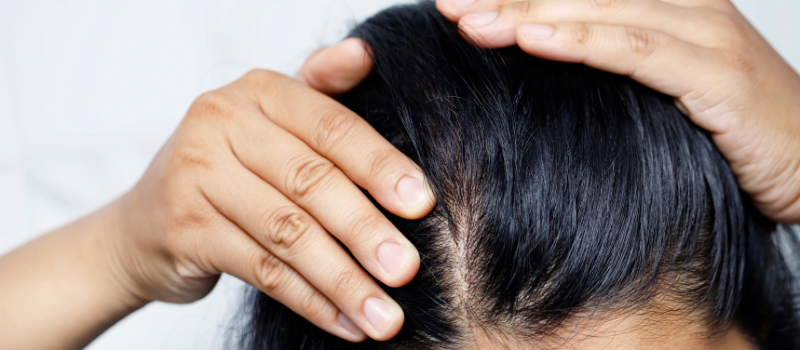
Hair loss isn’t always about hair. More often, it’s your body sending up a flag that something else is going on internally — and figuring out what that something is starts with a simple blood draw.
If you’ve noticed more hair in the shower drain, on your pillow, or in your brush lately, it’s easy to assume it’s just genetics or aging. But diffuse hair thinning and shedding is frequently linked to underlying, correctable issues that show up clearly in bloodwork. Our hair loss panel helps identify common underlying causes of hair loss through one comprehensive blood panel.
Your Thyroid Might Be the Culprit
The thyroid controls the pace of nearly every process in your body, including how your hair follicles grow. Both an underactive and overactive thyroid can trigger hair thinning, affecting up to 50% of patients with untreated thyroid disorders (NCBI: Impact of Thyroid Dysfunction on Hair Disorders). The disruption often shows up months before other symptoms are obvious. Checking TSH and Free T4 levels is one of the fastest ways to rule this in or out.
Low Iron Stores Can Quietly Drain Your Hair
Ferritin is your body’s iron storage marker, and low ferritin is one of the most common — and most overlooked — causes of diffuse hair shedding, especially in women. Research shows mean ferritin and vitamin D levels are significantly lower in patients with hair loss than in healthy individuals (PMC study on ferritin and vitamin D in diffuse hair loss). You don’t need to be anemic to notice hair loss — ferritin can dip low enough to affect hair growth well before a standard anemia diagnosis. Pairing ferritin with an Iron + TIBC panel (NIH Office of Dietary Supplements) gives a fuller picture of how your body is storing and using iron.
ost schools require a provider note before your child can return to class. We can see your child, confirm the type, write the prescription if it’s bacterial, and get you the documentation to get back to school.
Vitamin D and B12: The Follicle Fuel
Hair follicles actually have their own vitamin D receptors, and low vitamin D has been linked to increased shedding and slower regrowth. Vitamin B12 plays a similar supporting role — it’s essential for red blood cell production and delivering oxygen to the scalp, and a deficiency can leave hair follicles under-fueled. Both are easy to miss without targeted testing, since low levels don’t always come with obvious symptoms on their own.
But a provider visit is still worth it to confirm the diagnosis, rule out other causes, and get guidance on keeping your child comfortable and preventing spread to siblings. We can also confirm whether your child is clear to return to school.
The Bigger Picture: CBC and CMP
A Complete Blood Count and Comprehensive Metabolic Panel round out the picture by checking for anemia, blood sugar imbalances, and liver or kidney function — all of which can influence hair health even when they aren’t the headline cause.
Why Guessing Isn’t the Answer
The tricky part about hair loss is that several of these causes can look identical from the outside. Thinning from a thyroid imbalance can look a lot like thinning from low ferritin, which can look a lot like thinning from a vitamin deficiency. Guessing means spending months (and money) on treatments that may be solving the wrong problem.
Blood work takes the guesswork out. Instead of trying one fix at a time, you get a clear read on what’s actually happening inside your body — so you can address the real cause, not just the symptom.
Start with Your Numbers
That’s exactly why we built the Hair Loss Panel. One simple blood draw covering CBC with Differential, CMP (14), TSH, Free T4, Ferritin, Iron + TIBC, Vitamin D, and Vitamin B12 — the key markers tied to hair health, all in one panel.
- Transparent pricing
- Next-day results
- Scan to get started
Optimizing your health starts with knowing your numbers. If your hair has been changing lately, let your bloodwork tell you why.